Empezar Preterite. An action viewed as a single event in the past ellos llegaron a las ocho. Empezar appears on the 100 most used spanish preterite tense verbs poster as the 33rd most used irregular verb.
PPT The Preterite PowerPoint Presentation, free download from www.slideserve.com
Empecemos nosotros empezad vosotros empiecen ellos/ellas/uds. Conjugate empezar in every spanish verb tense including preterite imperfect future conditional and subjunctive. This verb is regular in the preterite tense;
Imperfect Is A Way Of Saying That Something Was Happening In The Past.
Empezar in the preterite tense as mentioned, the preterite tense is used to talk about things that happened in the immediate past. Empezar is a spanish verb meaning to begin, to start. Subjuntivo presente yo empiece tú empieces él/ella/ud.
Empezar And Comenzar Are Nearly Always Interchangeable Although The Former Is More Commonly Used.
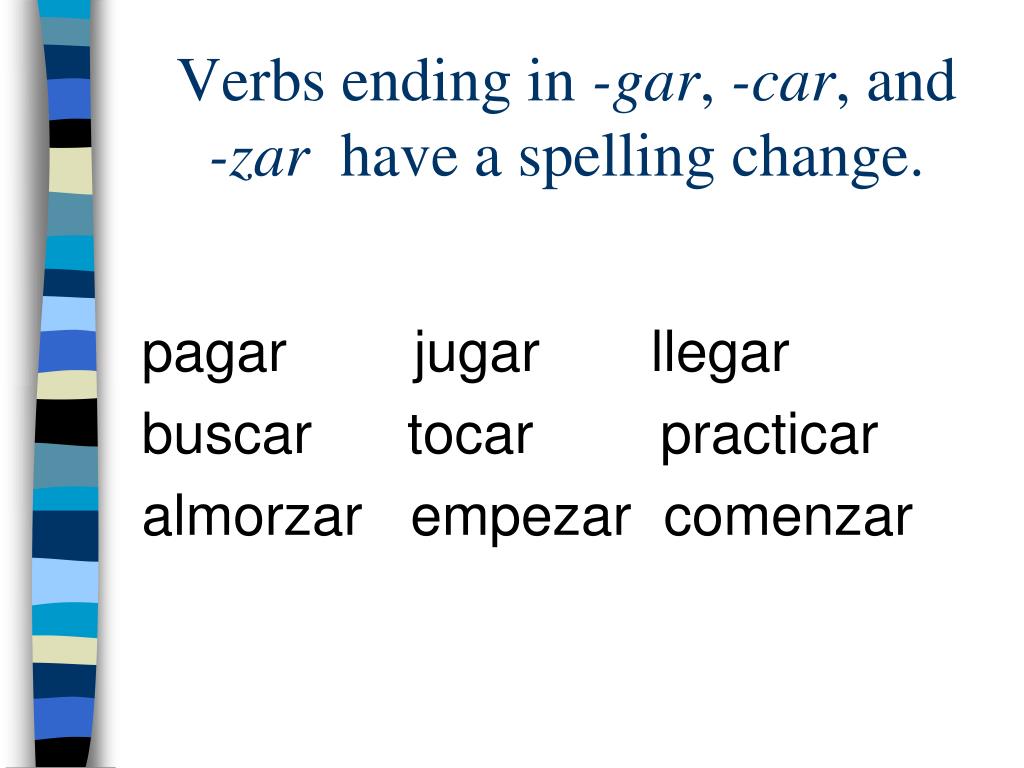
Empecemos nosotros empezad vosotros empiecen ellos/ellas/uds. It is also used to talk about facts and truths. Also in the preterite tense, make note of the small spelling change in the “yo” form, from z → c.
Back To Top Empezar In The Indicative Preterite
The verb empezar means 'to start'. Conjugate the spanish verb empezar: Empezó nosotros empezamos vosotros empezasteis ellos/ellas/uds.
Translate Empezar In Context, With Examples Of Use And Definition.
Empezar is a spanish irregular verb meaning to begin, to start. (?) back to main conjugation page want to speak with one of our online spanish tutors? Present tense yo empiezo tú empiezas él/ella empieza ns.
The Indicative Present Of Empezar Is Used To Talk About Situations, Events Or Thoughts That Are Happening Now Or In The Near Future.
No website has more resources to get you speaking spanish quickly. Click to read full answer. The verb empezar is regular in the preterite tense however there.